Have you noticed that your mother, father, or another older loved one is showering less often than they used to? Maybe they refuse to take a shower, wear the same clothes for several days, or seem to need more help in the bathroom.
An elderly person who refuses to shower is not necessarily facing a serious problem. There are many possible reasons for this change, including fear of falling, reduced mobility, pain, fatigue, loss of confidence, or a bathroom that is no longer suited to their abilities.
However, when personal hygiene difficulties appear alongside other changes in everyday activities, they may be a sign that your loved one's needs are changing.
So, what should you do when an elderly person refuses to shower? How can you help without compromising their dignity, and when should you consider additional support?
Here are the main signs to watch for, possible reasons behind the change, and solutions to consider.
What are the signs that an older adult is having difficulty with personal hygiene?
Bathing is an important activity of daily living. It requires mobility, flexibility, strength, and balance. As people age, tasks that once seemed simple can become increasingly challenging.
You may notice that your loved one:
Showers much less often
Your loved one may take fewer showers or repeatedly postpone bathing.
An occasional change in bathing frequency is not necessarily concerning. However, a lasting change is worth paying attention to, especially if it occurs alongside other changes in their daily routine.
Refuses to shower or bathe
Your loved one may say they no longer want to shower, find the shower uncomfortable, or consistently avoid going into the bathroom.
In some cases, the refusal may be related to a physical difficulty, discomfort, or fear rather than simply a lack of willingness.
Is afraid of getting in or out of the shower
The bathroom can become an intimidating environment when an older adult has balance or mobility problems.
Fear of slipping or falling may cause them to avoid showering or bathing altogether.
Has difficulty reaching certain parts of their body
Bending down to wash their legs, reaching their back or feet, or standing for an extended period can become difficult.
These movements require a combination of strength, flexibility, mobility, and balance.
Frequently wears the same clothes
Repeatedly wearing the same clothes, especially when they are visibly dirty or stained, may sometimes indicate that personal hygiene and dressing routines are becoming more difficult to manage.
This can be particularly meaningful when it occurs alongside difficulty choosing clothes, getting dressed, or doing laundry.
Needs help with tasks they used to do independently
Your loved one may initially ask for help getting into the shower, washing their hair, drying themselves, or choosing their clothes.
This is an important change to observe because it may be part of a broader decline in independence.
Difficulties with personal hygiene can directly affect an older adult's dignity and sense of independence. They may also be related to a fear of slipping or falling in the bathroom.
Why does an elderly person refuse to shower?
There is no single reason why an older adult may stop bathing regularly. Before assuming that they are losing their independence, it is important to understand what has changed.
Fear of falling
Fear of falling can be one of the reasons an elderly person refuses to shower or bathe.
Getting into a bathtub, stepping out of a shower, standing on a wet surface, or bending down to wash can all become challenging.
If your loved one is afraid of falling in the bathroom, this fear may gradually lead them to avoid essential daily activities.
For more information, see our guide on fall prevention for seniors.
Reduced mobility
An older adult who is having difficulty walking or has lost some strength may struggle to get to the bathroom and complete all the steps involved in bathing.
The challenge may be even greater when the bathroom is far from the bedroom or includes stairs, obstacles, or a difficult-to-access bathtub.
Pain or fatigue
Joint pain, significant fatigue, or reduced strength can make showering much more physically demanding than it used to be.
A task that once took only a few minutes may suddenly feel exhausting.
An unsafe or poorly adapted bathroom
A difficult-to-access bathtub, lack of grab bars, inadequate lighting, or a slippery shower floor can make personal hygiene more challenging.
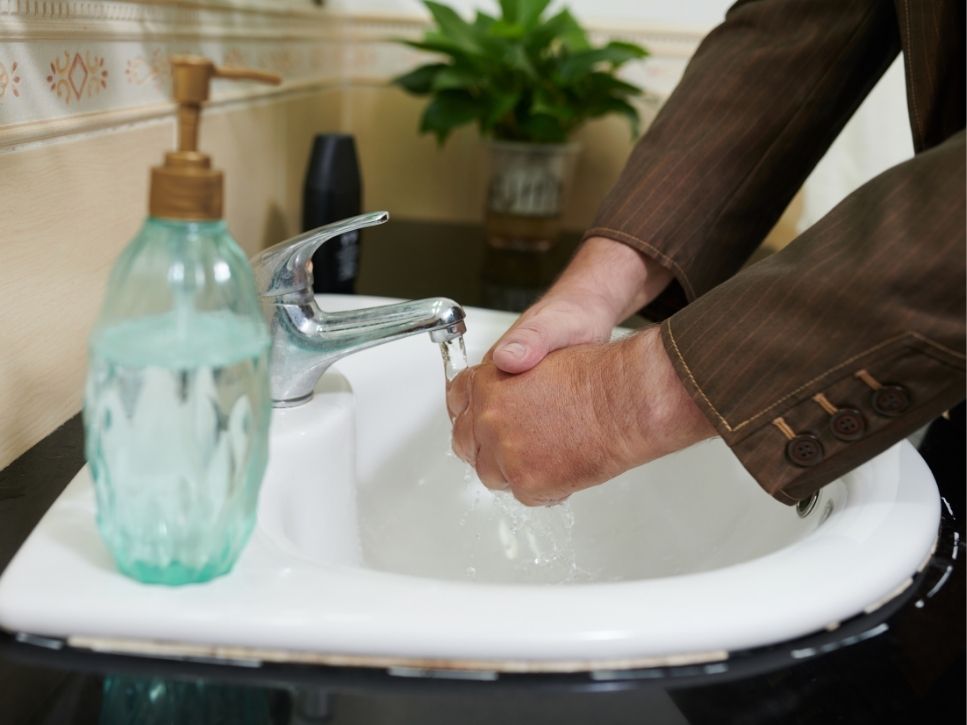
In these situations, the issue may not be that the person does not want to bathe. The environment itself may have become difficult or unsafe to use.
Cognitive changes
Some cognitive changes can also affect everyday routines.
An older adult may forget to shower, lose track of their routine, or need encouragement to begin certain tasks.
This does not automatically mean that a specific medical condition is responsible. When an important or sudden change occurs, it may be appropriate to discuss it with a healthcare professional.
Loss of confidence
An older adult who is increasingly struggling with everyday tasks may feel embarrassed about asking for help.
They may therefore avoid the situation rather than admit that they can no longer complete certain tasks independently.
How can bathing difficulties affect an older adult's independence?
A bathing problem may initially seem like an isolated issue.
However, it can sometimes be the first step in a broader series of changes in everyday life.
Difficulty getting into the shower
↓
Fear of falling
↓
Avoiding bathing
↓
Need for assistance
↓
Greater dependence
↓
Difficulty living independently
This is why it is important not to look only at personal hygiene.
Instead, ask yourself: What other activities have become difficult?
Does your loved one also have difficulty:
- walking or using stairs?
- getting dressed?
- preparing meals?
- shopping for groceries?
- maintaining the home?
- taking medications properly?
- leaving the house?
- managing certain situations alone?
Bathing and dressing are important activities of daily living. When several everyday activities become difficult at the same time, it may indicate that your loved one's support needs are changing.
What should you do when an elderly person refuses to shower?
The first step is usually to avoid confrontation.
Telling your loved one that they have to shower or pointing out that they are no longer following their usual hygiene routine may lead to embarrassment, frustration, or resistance.
Talk with your loved one
Choose a calm moment and try to understand what is making bathing difficult.
You might simply ask:
"Is there anything that makes the bathroom uncomfortable for you?"
or:
"Has taking a shower become more difficult than it used to be?"
The goal is to understand the problem rather than simply trying to change the behaviour.
Make the bathroom safer
Depending on the situation, certain adaptations may make bathing easier and safer:
- installing grab bars;
- using an appropriate non-slip surface;
- adding a shower chair;
- improving lighting;
- making personal hygiene products easier to reach;
- removing obstacles;
- improving shower accessibility.
If significant modifications are being considered, an assessment of your loved one's needs can help determine which adaptations are most appropriate.
Simplify the routine
Bathing can sometimes be broken down into smaller steps.
Your loved one may need more time, breaks, or a quiet environment.
Maintaining a predictable routine can also make everyday tasks easier and help the person maintain their sense of familiarity and control.
Offer assistance without taking away independence
The goal is not necessarily to bathe your loved one yourself.
Instead, provide help with the specific steps they can no longer complete safely or comfortably on their own.
This approach can help preserve as much independence and dignity as possible.
Get additional support
As care needs increase, home support services or assistance from professionals may become an option.
If the change is sudden, worsening quickly, or accompanied by other significant changes, it may also be appropriate to discuss the situation with a healthcare professional.
If you are considering remaining at home, it is also important to assess the full range of support services your loved one may need rather than looking only at bathing assistance.
When should you seek additional help?
An occasional difficulty does not necessarily mean that an older adult can no longer live independently.
However, it is important to pay closer attention when the difficulty becomes recurring or occurs alongside other changes in daily life.
A simple way to think about it is:
- Occasional difficulty → monitor and understand the situation.
- Recurring difficulty → adapt the routine and environment.
- Several daily activities are becoming difficult → assess the need for additional support.
- Safety is compromised or abilities are declining → consider a more comprehensive support solution.
This last threshold is especially important when an older adult lives alone.
If your loved one is at risk of falling in the bathroom, can no longer manage essential daily tasks, or needs regular supervision to remain safe, their needs may be beyond what family members can reasonably provide.
When should you consider senior living?
Considering a supportive senior living environment does not necessarily mean that your loved one has lost all independence.
In fact, a setting designed around the needs of older adults can sometimes help a person maintain more independence while having access to the support they need.
This option may be worth considering:
When several daily activities are becoming difficult
If your loved one is struggling with bathing, dressing, preparing meals, or getting around, their needs may go beyond occasional assistance.
When safety at home is becoming a concern
Falls, particularly in the bathroom, can become a significant concern.
A home that was once perfectly suitable may no longer match your loved one's current abilities.
When family caregivers can no longer provide all the necessary support
Family members may want to help, but they cannot always be available morning, afternoon, and evening.
When assistance becomes necessary every day or several times a day, it may be time to explore additional options.
When isolation becomes a concern
A supportive living environment can also provide more opportunities for social interaction, activities, and a structured daily routine.
When the older adult wants to maintain their independence
It is important to remember that senior living does not necessarily mean giving up independence.
The right environment may actually allow an older adult to continue doing many things independently while having assistance available when needed.
How can a supportive living environment make everyday life easier?
When an older adult is struggling with personal hygiene, the environment can make a significant difference.
Depending on the setting and services offered, a supportive living environment may provide:
- spaces designed to make mobility easier;
- environments adapted to the needs of older adults;
- accessible support services;
- prepared meals;
- opportunities for social interaction;
- activities;
- a reassuring human presence;
- assistance with daily activities, depending on the residence and level of care.
For someone who avoids showering because they are afraid of falling, for example, a better-adapted environment may reduce some of the obstacles that made their daily routine difficult.
The goal is not to do everything for the person. It is to help them continue living as independently as possible in an environment that matches their needs.
How do I know which senior living option is right for my loved one?
Every older adult has different needs. Before choosing a senior living environment, it is therefore important to assess the overall situation.
Assess their level of independence
What can your loved one still do independently? Which activities require assistance?
Pay particular attention to basic activities such as bathing, dressing, eating, and mobility, as well as more complex tasks such as preparing meals, shopping, or managing medications.
Identify the services they need
Do they need help with bathing, meals, mobility, or other daily activities?
It is important to consider both their current needs and how those needs may evolve.
Consider their preferences
The environment should also reflect their habits, interests, lifestyle, and comfort level.
Consider the budget
Costs and included services can vary from one senior living option to another.
Understanding the costs in advance can help your family compare options realistically and plan for the future.
Compare available senior living options
Visiting different environments can help you compare services, amenities, activities, atmosphere, location, and levels of support.
This is exactly the kind of process that the senior housing specialists at Bonjour Résidences can help you navigate.
Other signs of declining independence to watch for
A personal hygiene problem does not always occur on its own.
If your loved one is increasingly having difficulty bathing, also pay attention to their ability to move around, get dressed, eat properly, and remain safely at home alone.
These changes can sometimes be connected.
For more information, explore these related topics:
Loss of Mobility in Older Adults: Warning Signs and Solutions
- Older Adults Living Alone: When Does It Become Unsafe?
- When an older adult can no longer get dressed independently: what should you do?
- When an older adult stops eating or forgets to eat: when should you be concerned?
The goal is not to look for problems where there are none, but to consider the overall situation.
Wondering whether your loved one would benefit from a supportive living environment?
Seeing an elderly person who no longer bathes regularly can be difficult and concerning for a family. However, a change in bathing habits does not automatically mean that your loved one can no longer live independently or that they need to leave their home.
The first step is to understand what is making bathing difficult.
Fear of falling, reduced mobility, pain, fatigue, loss of confidence, or an unsuitable bathroom can turn a simple daily task into a significant challenge. When several other everyday activities are becoming difficult as well, however, it may be time to consider additional solutions.
A supportive senior living environment can provide a safer setting, appropriate services, and assistance that can help an older adult maintain their independence for as long as possible.
Wondering which option might be right for your loved one?
You don't have to navigate this process alone. The senior housing specialists at Bonjour Résidences can assess your loved one's situation at no cost and guide you toward the solutions that best fit your family's needs.
For personalized support anywhere in Quebec, call us toll-free at 1 (844) 918-1020 or submit an online accommodation request.
FAQ
Why does an elderly person refuse to shower?
Several factors can explain why an older adult may refuse to shower, including fear of falling, pain, fatigue, reduced mobility, an unsafe bathroom, loss of confidence, or cognitive changes. It is important to understand the reason behind the behaviour before assuming that the person is losing their independence.
What should I do when an elderly person refuses to shower?
Start with a calm conversation to understand why bathing has become difficult. You can then consider adapting the bathroom, simplifying the routine, or providing partial assistance.
How can I get an elderly person to shower?
Avoid turning bathing into a confrontation. Instead, try to understand what is causing the refusal. Fear of falling, discomfort, pain, fatigue, or difficulty completing certain steps may be contributing factors.
Why do elderly people not want to shower?
An older adult may avoid showering because of fear of falling, physical limitations, pain, fatigue, embarrassment, loss of confidence, or an environment that no longer feels safe or comfortable.
When should I worry if an elderly person stops bathing?
An occasional change in bathing habits is not necessarily concerning. Pay closer attention when the change persists or occurs alongside difficulties with dressing, mobility, eating, household tasks, or other activities of daily living.
Does refusing to bathe mean that an older adult is losing their independence?
Not necessarily. A bathing problem on its own does not automatically indicate a loss of independence. However, when it occurs alongside other functional difficulties, it may be useful to assess whether your loved one's support needs are changing.
Can an older adult maintain their independence in senior living?
Yes. Moving into a supportive senior living environment does not necessarily mean giving up independence. Depending on their abilities and the services available, an older adult may continue doing many activities independently while receiving assistance when needed.
When should an older adult consider senior living?
Senior living may be worth considering when several daily activities are becoming difficult, safety at home is a concern, family caregivers can no longer provide the necessary support, or the older adult would benefit from an environment better suited to their needs