


Chart of the best Intermediate Resources (IR)
Intermediate resources (RI) provide housing and support services to help people in need with social reintegration. Their mission is to provide a living environment that resembles a normal home setting as closely as possible. Residents can also receive care and assistance to help address certain physical or psychological challenges.
There are three types of intermediate resources: supervised apartments, host homes and group homes. People who wish to stay in an intermediate resource must be referred by a public institution. RI services may include essential support with personal hygiene and daily living needs.
The Quebec Health Insurance Plan (RAMQ) determines the costs paid by residents of an intermediate resource. In supervised apartments, residents receive the support or assistance they need. These apartments can accommodate one or more people, while the intermediate resource provides the necessary care, supervision and support.
A host home is an intermediate resource that may accommodate a person living with an intellectual disability, autism spectrum disorder or a severe mental health disorder. Its main feature is its ability to adapt support and assistance to the specific needs of each resident.
A group home is a house or facility operated as an intermediate resource where different professionals work. These professionals provide support and assistance to residents who are dealing with complex needs or challenges.
This list of intermediate resources provides an overview of the different types of living environments, services and resources available in Quebec.















FAQ
An intermediate resource (IR) is defined as a living environment adapted to the needs of semi-autonomous or in loss of autonomy seniors requiring help in their daily activities for 1 to 3 hours of care per day. Intermediate resources provide housing and support services for the social reintegration of people in difficulty. Intermediate resources provide essential services for the resident's lifestyle and personal hygiene. It is the Quebec Health Insurance Plan (RAMQ) that calculates the costs paid by the resident of an intermediate resource.
When looking for an intermediate resource, a social worker employed by a public institution such as a CLSC will assess the degree of autonomy and determine the most appropriate resource for the person's needs. For all admissions, you must contact the CLSC in your area.
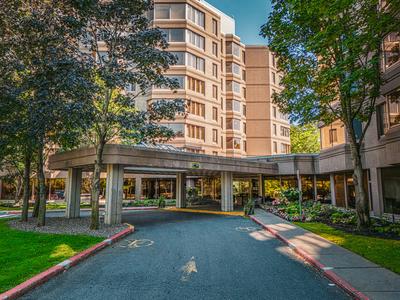
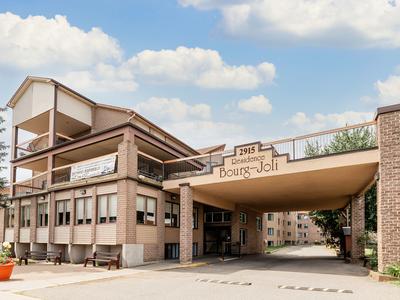
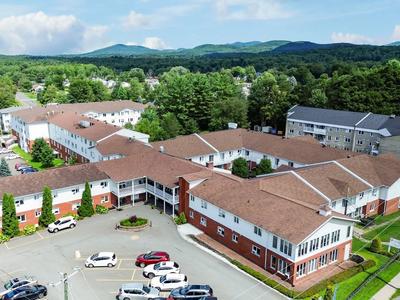
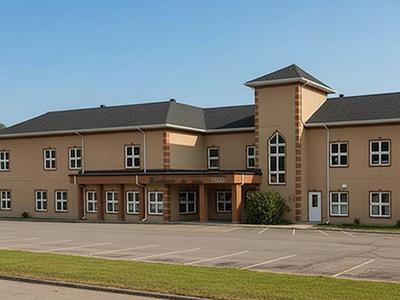
The best intermediate resources in Québec are: Résidence Rivière Richelieu, Résidence Bourg-Joli and Maison L'Étincelle Verdun.
The intermediate resource exclusively offers services to people who have been referred by the Quebec health system, offering shelter costs that are representative of the resident's income. On the other hand, the waiting list for access is sometimes long. In the case of a private residence, it is also possible to offer services to a semi-autonomous clientele, but admission can be done without going through the health system. The advantages are that the private residence can offer rooms that are available more quickly, so you avoid a waiting list and you could be entitled to a tax credit.
If there is a waiting list for an intermediate resource, Bonjour Résidences can offer you hosting options without a waiting list quickly. Let us help you by filling out this accommodation form.