


Yoga is a gentle and social activity that can be easily adapted to the physical abilities of older adults. Among the different ways to practise it, chair yoga for seniors is an especially appealing option for older adults with limited mobility or those who prefer to avoid exercises that require getting down on the floor.
But what are the actual benefits of yoga for seniors? Can yoga help improve balance, relieve back pain, maintain bone health or support memory? And what is the difference between traditional yoga and adapted chair yoga?
Discover how this holistic practice can become part of a senior's daily routine, the key poses that can be practised regularly, and the precautions to keep in mind when exercising safely, whether at home or in a retirement home.
What Is Yoga Adapted for Seniors?
Adapted yoga is a gentle practice that combines yoga poses, breathing exercises (pranayama), stretching, mobility movements and relaxation. For older adults, each exercise can be adjusted according to their energy level, flexibility, balance and individual physical abilities.
Contrary to popular belief, you do not need to be particularly flexible, athletic or in excellent physical condition to start yoga. The goal is simply to move with greater awareness, maintain mobility and listen to your body while progressing at your own pace.
Who Is Senior Yoga For?
Yoga can be adapted for older adults with different levels of mobility.
Some independent seniors may feel comfortable performing standing poses or exercises on a yoga mat, while others may benefit greatly from gentle movements performed while seated in a chair.
The essence of adapted yoga is accessibility: the focus is on feeling comfortable while moving rather than on performance.

Chair Yoga or Traditional Yoga: Which Is Right for You?
- Traditional yoga: may be suitable for seniors who have good overall mobility and can safely get down to and up from the floor without significant difficulty or dizziness.
- Chair yoga: is particularly well suited to people with joint stiffness, balance concerns, limited mobility or knee discomfort that makes floor exercises uncomfortable.
In both cases, sessions can include breathing exercises, gradual stretching and a period of relaxation.
What Is Chair Yoga for Seniors?
Chair yoga involves performing a series of yoga movements, stretches and modified poses while remaining comfortably seated or using the back of a chair for support.
This approach eliminates the need to get down onto the floor, which can make yoga much more accessible for seniors with limited mobility or balance concerns.
How Does Chair Yoga Work?
A typical chair yoga session may include gentle and controlled movements such as:
- Controlled breathing: breathing exercises such as Ujjayi breathing can encourage relaxation and body awareness.
- Joint mobility exercises: gentle movements involving the hips and ankles can help maintain mobility and reduce stiffness.
- Spinal stretches: gentle seated twists and modified movements can encourage mobility through the spine.
- Chest and upper-body opening: movements such as seated Eagle Arms or gentle assisted neck stretches can help release tension around the shoulders.
- Final relaxation: a gentle seated forward fold can help relax the back and bring the session to a calm conclusion.
All movements should be performed slowly and within a comfortable range of motion.
Popular Chair Yoga Poses for Seniors
Some simple chair yoga poses for seniors include:
- Seated Cat-Cow: a gentle movement that alternates between rounding and lengthening the spine while coordinating movement with the breath.
- Seated Warrior II: a modified version of Warrior II that works the hips and upper body while keeping the person supported by the chair.
- Ankle-to-Knee Stretch: a gentle hip stretch that can also help release tension through the lower back.
Is Chair Yoga Suitable for Seniors with Limited Mobility?
Yes. Chair yoga is one of the most accessible forms of adapted physical activity for older adults.
Because many exercises are performed while seated, seniors can stay active without having to get down onto the floor or maintain unsupported positions that may challenge their balance.
However, every exercise should be adapted to the individual's abilities, and a stable chair should always be used.
What Are the Benefits of Yoga for Seniors?
By combining movement, controlled breathing and mindfulness, yoga can support several aspects of physical and emotional well-being as we age.
1. Support Bone and Joint Health
As we get older, maintaining bone strength and joint mobility becomes increasingly important.
Gentle yoga can encourage regular movement and, depending on the exercises selected, provide controlled resistance that helps support muscle and functional strength.
For seniors with osteoporosis, however, certain poses may need to be modified or avoided. A healthcare professional or qualified instructor can help determine which movements are appropriate.
2. Help Relieve Back Discomfort and Strengthen the Core
Lower back discomfort is common among older adults and can sometimes be associated with stiffness, reduced mobility or changes in posture.
Gentle yoga can help maintain mobility through the spine, stretch tight muscles and strengthen the muscles that support everyday movement.
For some seniors, regular adapted yoga may therefore help reduce back discomfort and improve overall movement.
3. Help Maintain Muscle Strength
Age-related muscle loss, known as sarcopenia, can affect strength, mobility and independence.
Yoga can contribute to maintaining functional strength through controlled movements and poses that require muscles to support and stabilize the body.
It should not replace all forms of strength training, but it can be a valuable complement to a broader active lifestyle.
4. Improve Balance and Help Prevent Falls
Falls are an important concern for older adults because they can affect independence and quality of life.
Yoga can help develop body awareness while strengthening the legs, ankles and core. Certain exercises also encourage greater awareness of posture and movement.
A note about safety: Although yoga may support balance, strength and body awareness, it should always be practised in a safe environment appropriate to the person's physical abilities. Chair-based or supported exercises may be preferable for seniors with significant balance concerns.
5. Support Mental Well-Being and Memory
Yoga combines movement, breathing and mindfulness, creating an opportunity to slow down and focus on the present moment.
Breathing exercises and meditation may support relaxation, attention and emotional well-being. Focusing on slow, coordinated movements can also encourage body awareness and mental engagement.
For seniors, taking a few quiet moments to concentrate on breathing and movement can become a valuable part of a regular wellness routine.
6. Promote Relaxation and Better Sleep
Yoga's gentle movements and breathing exercises can help promote relaxation and reduce everyday stress.
A few gentle stretches or breathing exercises before bedtime may help create a calming routine and prepare the body for rest.
Yoga should not be considered a treatment for insomnia, but incorporating relaxation into a regular routine may contribute to better overall sleep and well-being.
Would you like to learn more about the effects of yoga on older adults? Discover our complete guide to The Benefits of Yoga for Seniors’ Health.
4 Adapted Yoga Poses to Try on a Mat or Standing
Seniors who have good mobility and feel comfortable exercising on a mat or while standing can try the following poses.
1. Mountain Pose (Tadasana)
Stand with your feet comfortably supported, your shoulders relaxed and your posture naturally upright.
This pose encourages awareness of alignment, posture and balance.
2. Tree Pose (Vrksasana)
Stand near a wall or sturdy chair for support.
Place one foot against the opposite ankle or lower leg, depending on your balance and comfort level. Avoid forcing the position.
This pose can help practise balance and lower-body stability.
3. Sphinx Pose
Lie on your stomach and support your upper body on your forearms.
Gently lift through the chest while keeping the shoulders relaxed.
This pose may help strengthen the upper back and gently open the chest. It is not appropriate for everyone, particularly those who have difficulty getting down to or up from the floor.
4. Relaxation Pose (Savasana)
Traditionally performed while lying on the back, Savasana allows the body to rest at the end of a yoga session.
Seniors who cannot comfortably lie on the floor can practise the same principle of relaxation while seated in a supportive chair.
What Are the Mental Benefits of Yoga for Seniors?
Yoga's benefits go beyond physical movement. It can also support emotional well-being and create opportunities for connection.
Encourage Relaxation and Calm
Deep, controlled breathing and gentle movement can help release physical tension and create a greater sense of calm.
Yoga may also help seniors establish a regular moment of relaxation during the day.
Take Time for Yourself
A yoga class provides an opportunity to slow down and focus on your breathing and body without worrying about performance.
For older adults, this can become a simple way to reconnect with themselves and practise mindfulness.
What Does a Senior Yoga Class Look Like?
An adapted yoga class is generally led by a trained instructor and may last between 30 and 45 minutes.
Breathing Preparation
The session may begin with breathing exercises and gentle movements to help participants settle in.
Adapted Movements and Poses
The instructor guides participants through modified exercises and may use equipment such as:
- chairs;
- yoga blocks;
- straps;
- cushions.
Movements can be modified according to each participant's abilities.
Relaxation
The class usually ends with a period of quiet rest or guided relaxation.
Respecting Individual Limits
Every senior has different physical abilities.
Yoga poses should stretch or strengthen without causing pain. If an exercise causes pain, dizziness or unusual discomfort, stop the movement and modify the exercise as needed.
Is Yoga Safe for Seniors?
Although yoga is generally a gentle form of physical activity, seniors should still take certain precautions.
Start Gradually
Begin with short sessions and simple movements, then gradually increase the duration or intensity as your comfort and abilities allow.
Use Supports
A stable chair, wall or other sturdy support can help improve safety and reduce the risk of losing balance.
For chair yoga, choose a stable chair without wheels.
Listen to Your Body and Seek Professional Advice When Needed
Seniors with heart conditions, recent surgery, severe osteoporosis, significant joint problems or acute pain should consult a healthcare professional before beginning a new exercise routine.
Stop exercising if you experience chest pain, dizziness, unusual shortness of breath, sharp pain or significant loss of balance.
Is Yoga Offered in Retirement Homes?
In Quebec retirement homes, wellness and active living are an important part of many residents' daily routines.
Depending on the residence, activity programs may include adapted yoga, chair yoga, gentle fitness classes, walking groups and other physical activities designed for different levels of mobility.
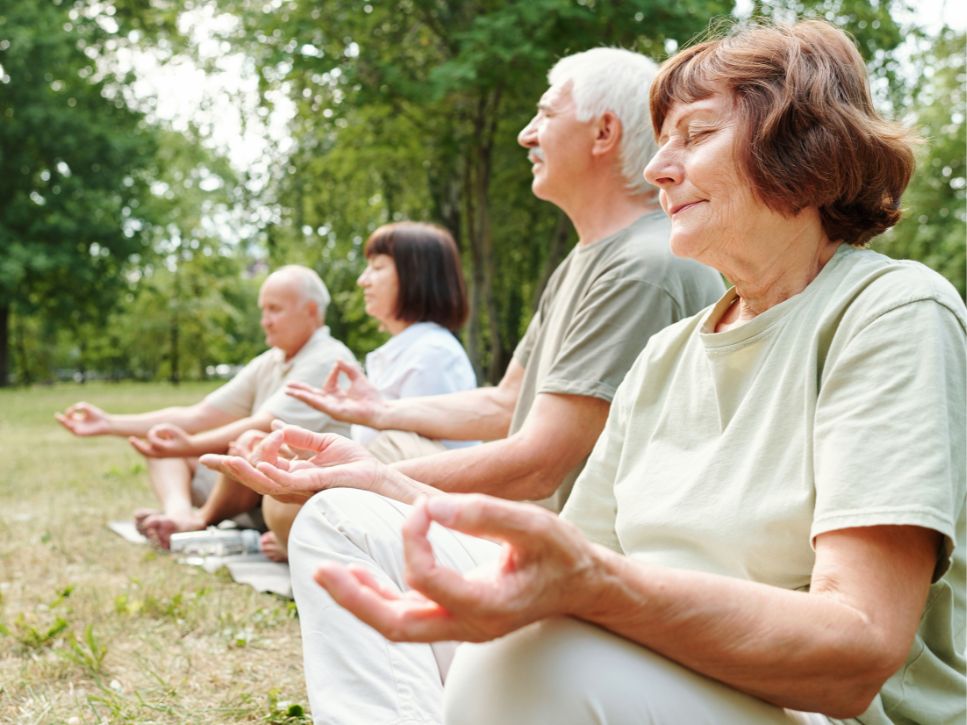
Yoga is just one of the many activities available to residents. To discover the broader role of recreational activities in retirement homes and their contribution to well-being and social connection, explore our complete guide to RPA activities: a rich and stimulating social life.
Chair yoga can also be a particularly useful activity during a summer heat wave because it can be practised indoors in an air-conditioned activity room.
Discover more ideas for staying active and entertained during hot weather in our selection of Cool Indoor Activities for Seniors During a Heat Wave.
What Other Activities Can Seniors Enjoy in a Retirement Home?
Beyond yoga, retirement homes can offer a wide variety of activities adapted to different interests and levels of independence.
These may include gentle fitness classes, walking groups, arts and crafts, live music, concerts, memory games, card games and social gatherings.
Yoga is only one of many activities that can make retirement home life more active, social and enjoyable.
Discover more ideas in our selection of 10 Activities to Enjoy Your Retirement in Senior Living.
Yoga: A Gentle Way to Stay Active as You Age
Whether practised on a mat, standing with support or comfortably seated in a chair, yoga can be a gentle and enjoyable way for older adults to maintain an active lifestyle.
Beyond supporting physical mobility, yoga can encourage relaxation, body awareness and social connection. For seniors living in a retirement home, participating in a yoga or chair yoga class can also be a wonderful opportunity to meet other residents and enjoy a shared activity.
The goal is not to achieve perfect poses or push your body beyond its limits. The goal is to move safely, respect your abilities and enjoy being active.
Are you looking for a retirement home that offers a diverse and engaging activity program adapted to the needs of your loved one?
The team at Bonjour Résidences and its housing specialists offer free, personalized guidance to help you find the right senior residence anywhere in Quebec.
Contact our team today at 1 (844) 918-1020or complete an online accommodation request.
FAQ: Yoga and Chair Yoga for Seniors
Is chair yoga safe for seniors with osteoporosis?
Gentle, appropriately modified chair yoga may be suitable for some seniors with osteoporosis. However, certain movements, particularly deep forward bends or forceful spinal twists, may not be appropriate.
People with osteoporosis should consult a healthcare professional or qualified instructor to determine which exercises are safe for them.
What are the specific benefits of chair yoga for seniors?
Chair yoga can help maintain flexibility, mobility, body awareness and relaxation without requiring participants to get down onto or up from the floor.
It can be particularly useful for seniors with limited mobility or balance concerns.
Can yoga help reduce back pain in seniors?
Gentle yoga may help some older adults manage back discomfort by improving mobility, flexibility and the strength of supporting muscles.
However, persistent or severe back pain should be assessed by a healthcare professional.
How often should a senior do yoga?
One to three gentle yoga sessions per week can be a practical starting point for many seniors. Sessions can range from approximately 20 to 45 minutes depending on the person's abilities and comfort level.
Consistency is generally more important than intensity.
Can you do yoga with limited mobility?
Absolutely. Chair yoga for seniors with limited mobility can be adapted to different levels of physical ability.
Many exercises can be performed while seated, while a chair or other stable support can be used for modified standing movements.


