A family caregiver is someone who provides unpaid support to a relative or friend who is ill, has a disability or is losing independence. In Quebec, one person in four plays this role. When the help needed goes beyond what a family can give, a seniors' residence becomes an option. It does not replace the caregiver: it lets them stay involved without burning out.
Family caregiving in Quebec: key figures
- According to the Institut de la statistique du Québec (ISQ, 2024-2025), about 27% of Quebecers aged 15 and over, or nearly 2,076,300 people, acted as family caregivers.
- According to the ISQ (2024-2025), about 69% of family caregivers experienced stress related to their role in the past year.
- According to the ISQ (2024-2025), nearly 26% of family caregivers had difficulty finding help and resources.
Source: ISQ news release, November 3, 2026 (in French), Quebec survey on the health and well-being of family caregivers (18,608 respondents).
What is a family caregiver in Quebec?
A family caregiver provides regular support to someone close to them: going to appointments, helping with meals, managing medication, assisting with personal care or simply being there. This support often allows the person to stay at home longer. Over time, the tasks grow heavier and begin to affect the caregiver's family and work life.

The role mainly involves seniors. According to the ISQ (2024-2025), about 71% of family caregivers support a person aged 65 or over. Also according to the ISQ (2024-2025), 40% of family caregivers help their father or mother, and 15% help their spouse. One person may help several loved ones at once: according to the ISQ (2024-2025), 28% of family caregivers support two people.
What are the signs of caregiver burnout?
Caregiver burnout often sets in quietly. The most common signs are anxiety, chronic fatigue and a feeling of isolation. Many caregivers also struggle to find help, face limited access to home care and worry about their own health and future.
Recent data confirm this pressure. According to the ISQ (2024-2025), about 69% of family caregivers felt stress related to their role in the past year. According to the ISQ (2024-2025), about 49% find their responsibilities physically demanding. According to the ISQ (2024-2025), 17% report physical health problems related to their role. If you recognize these symptoms of caregiver burnout, it is time to look for support.
Work, money, health: the real cost of family caregiving
Caring for a loved one takes time, and that time often comes out of work hours. According to the ISQ (2024-2025), 44% of family caregivers had to interrupt a workday because of their role. According to the ISQ (2024-2025), 29% took unpaid leave and 26% reduced their working hours. According to the ISQ (2024-2025), about 8% left their job, temporarily or permanently.
Finances suffer too. According to the ISQ (2024-2025), nearly one family caregiver in four (25%) says the role affects their ability to meet financial obligations or essential needs. Before comparing options, it helps to add up the real cost of home support: home adaptations, private services, transportation and lost work hours add up quickly.
Before a residence: respite care, home support and financial help
A seniors' residence is not the only answer. Several resources can lighten the caregiver's load:
- Respite care: a break of a few hours or a few days, at home or in a host setting.
- Temporary stays in a seniors' residence: a short stay to recharge, recover after a hospital stay or try residence life.
- Your local CLSC: it assesses the person's needs and may offer home support services.
- L'Appui pour les proches aidants: its Info-aidant service listens to caregivers, informs them and directs them to resources in their region.
- Tax credits and programs: Revenu Québec offers a tax credit for caregivers, and a person receiving care who is 70 or older may qualify for the home care tax credit for retirement home residents aged 70 and older. In a private seniors' residence (RPA), the RPA Personalized Allocation may also cover certain care.
These services remain underused. According to the ISQ (2024-2025), nearly 46% of family caregivers used at least one service designed for them in the past 12 months. More than half, then, used none.
When should you consider a seniors' residence?
There is no perfect moment, but some signs show that home support is reaching its limits:
- Caregiving takes up a large part of your week. According to the ISQ, about one family caregiver in ten spends at least 20 hours a week on it (reported by the Journal de Sherbrooke, 2026).
- Your loved one has falls or can no longer stay alone safely.
- Memory loss, confusion or wandering appear. The signs of Alzheimer's disease deserve special attention, and residences offering Alzheimer's and dementia care can provide a safer setting.
- Your own health is declining: fatigue, constant stress, physical problems.
- The caregiver is an older spouse who struggles to keep up with the care.

These guidelines are general. To assess your loved one's situation, talk to their doctor or your local CLSC. Depending on their needs, assisted living can provide daily help while preserving much of their independence.
Why residence life can help the whole family
Moving to a seniors' residence means handing over daily logistics, meals and part of the care to qualified staff. Among the advantages you benefit from:
- secure 24-hour supervision, emergency call systems and, depending on the residence, nursing staff on site;
- all-inclusive services: housekeeping, linens and meals;
- a stimulating social life and varied activities that break isolation;
- in some residences, specialized units for cognitive loss or Alzheimer's disease.
The choice is wide: according to the Regroupement québécois des résidences pour aînés (RQRA, 2026), Quebec has about 135,700 units in private seniors' residences (RPA). The term retirement home is often used for these residences in everyday language. To find your way, see the types of residences (RPA, RI, CHSLD, MDA).
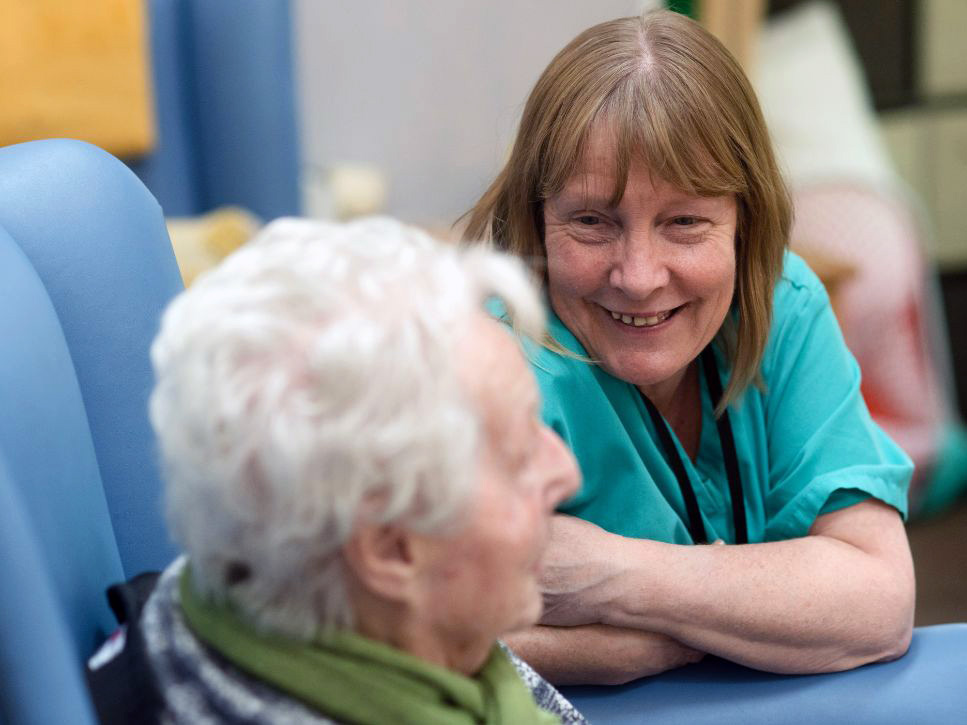
Most importantly, the family caregiver does not disappear after the move. They keep visiting, take part in decisions and go along to important appointments. Freed from the heaviest tasks, they can return to a relationship centred on quality time. To make sure everyone is comfortable with this change, it helps to make the decision as a family.
How Bonjour Residences can help
Finding help is a challenge in itself: according to the ISQ (2024-2025), nearly 26% of family caregivers had difficulty finding help and resources. Bonjour Residences offers free, personalized guidance to find the residence that fits your loved one's needs, preferences and budget. The guide to choosing the right senior residence also helps you prepare your visits.
Not sure where to start? A senior housing specialist can guide you through your search and identify residences suited to your loved one's situation: simply fill out an accommodation request. Submit an online accommodation request or call 1 (844) 918-1020.
FAQ
Who is considered a family caregiver in Quebec?
A family caregiver is anyone who provides unpaid support to a loved one who is ill, has a disability or is losing independence. It can be a child, a spouse, a friend or a neighbour. According to the Institut de la statistique du Québec (2024-2025), about 27% of Quebecers aged 15 and over, more than 2 million people, play this role.
What financial help is available to family caregivers?
In Quebec, family caregivers may claim Revenu Québec's tax credit for caregivers, depending on eligibility. The person receiving care may also qualify for the tax credit for home-support services for seniors, including in a seniors' residence. L'Appui pour les proches aidants, through its Info-aidant service, helps caregivers find other programs available in their region.
What is respite care for family caregivers?
Respite care gives family caregivers a break while another person or setting takes over. It can last a few hours at home or a few days in a temporary stay at a seniors' residence. According to the Institut de la statistique du Québec (2024-2025), nearly 46% of caregivers used at least one service designed for them in the past year.
When should a parent move to a seniors' residence?
It is time to consider a seniors' residence when your parent's safety or health, or your own, can no longer be ensured at home: falls, wandering, memory loss, many hours of help needed each week, or caregiver burnout. Every situation is different. Talk to your parent's doctor or your local CLSC before making a decision.
Can you remain a caregiver once your parent lives in a residence?
Yes. Moving to a private seniors' residence does not end the caregiver role; it changes it. Staff take care of meals, housekeeping and part of the care, while the family caregiver keeps visiting, takes part in decisions and goes along to important appointments, with more time for quality moments together.