


Directory of 207 Intermediate Resources (RI) in Québec
An intermediate resource (RI, ressource intermédiaire) is a housing setting linked by agreement to the public health network, offering a living environment as close as possible to a regular home, with daily support and assistance. RIs mainly welcome seniors with mild to moderate loss of autonomy, as well as adults with an intellectual disability, a physical disability, autism spectrum disorder or a mental health condition. They sit between an private seniors’ residences and a CHSLD: residents receive help with meals, hygiene and mobility, without needing continuous medical care.
There are four types of intermediate resources. In a supervised apartment, one or more people live in a unit and receive the support they need. A rooming house offers private rooms with shared common areas. A foster home (maison d’accueil) welcomes a few people, for example people with an intellectual disability, autism spectrum disorder or a serious mental illness, and adapts support to each one. A group residence is a facility where several workers provide support and assistance to residents with more complex needs.
To get a place in an RI, a person must be referred by the regional public institution (CISSS or CIUSSS) after a needs assessment. Health care and services are free, and the resident’s contribution for room and board is set by the RAMQ according to their financial situation. The Bonjour Résidences directory lists 207 intermediate resources across Québec. You can compare RI types, clienteles, services and nearby points of interest.
FAQ
What is the difference between an RI, an RPA and a CHSLD?
A private seniors’ residence (RPA) is mainly for independent or semi-autonomous seniors, who rent a unit directly. A CHSLD welcomes people with a significant loss of autonomy who need continuous care. An intermediate resource (RI) sits in between: it provides daily support and assistance, and admission goes through the CISSS or CIUSSS.
How do I get a place in an intermediate resource?
Requests go through the local CLSC or the regional CISSS or CIUSSS, made by the person, a loved one, a doctor or hospital staff. A professional assesses needs, autonomy and urgency, then refers the person to a suitable intermediate resource. It is not possible to move into an RI directly without this referral.
How much does an intermediate resource cost?
Health care and services received in an intermediate resource are free. Residents pay a monthly contribution for lodging, meals and upkeep of common areas. The amount is set by the government, billed by the RAMQ according to the resident’s financial situation, and reviewed every year on January 1.
What is the difference between an RI and an RTF?
A family-type resource (RTF, ressource de type familial), also called a foster family, welcomes a few people into its own home, which remains the family’s residence. An intermediate resource (RI) is an organized housing setting, such as a supervised apartment, rooming house, foster home or group residence, which can house more residents and provide more extensive support.
Who can live in an intermediate resource?
Intermediate resources mainly welcome seniors with mild to moderate loss of autonomy who need help with meals, hygiene or mobility. They also welcome adults with an intellectual disability, a physical disability, autism spectrum disorder or a mental health condition. Each RI listing specifies the clientele it serves.

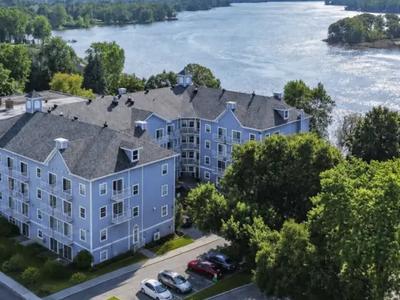


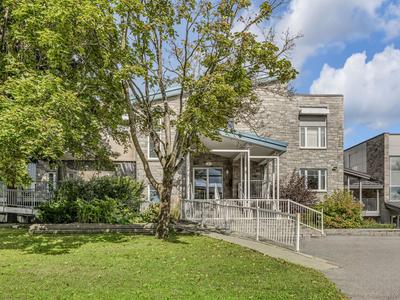


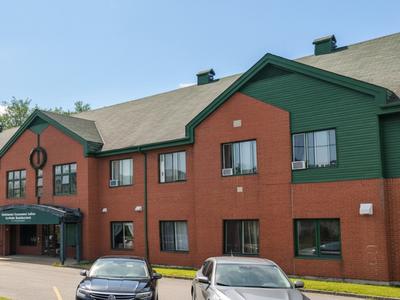


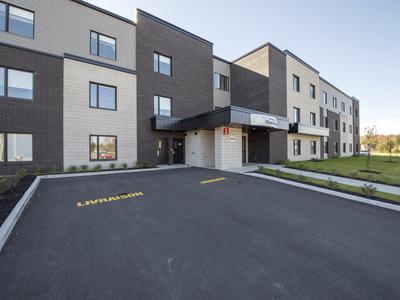


FAQ
An intermediate resource (IR) is defined as a living environment adapted to the needs of semi-autonomous or in loss of autonomy seniors requiring help in their daily activities for 1 to 3 hours of care per day. Intermediate resources provide housing and support services for the social reintegration of people in difficulty. Intermediate resources provide essential services for the resident's lifestyle and personal hygiene. It is the Quebec Health Insurance Plan (RAMQ) that calculates the costs paid by the resident of an intermediate resource.
When looking for an intermediate resource, a social worker employed by a public institution such as a CLSC will assess the degree of autonomy and determine the most appropriate resource for the person's needs. For all admissions, you must contact the CLSC in your area.
The best intermediate resources in Québec are: Le Waldorf, Résidence Rivière Richelieu and Résidence Bourg-Joli.
The intermediate resource exclusively offers services to people who have been referred by the Quebec health system, offering shelter costs that are representative of the resident's income. On the other hand, the waiting list for access is sometimes long. In the case of a private residence, it is also possible to offer services to a semi-autonomous clientele, but admission can be done without going through the health system. The advantages are that the private residence can offer rooms that are available more quickly, so you avoid a waiting list and you could be entitled to a tax credit.
If there is a waiting list for an intermediate resource, Bonjour Résidences can offer you hosting options without a waiting list quickly. Let us help you by filling out this accommodation form.